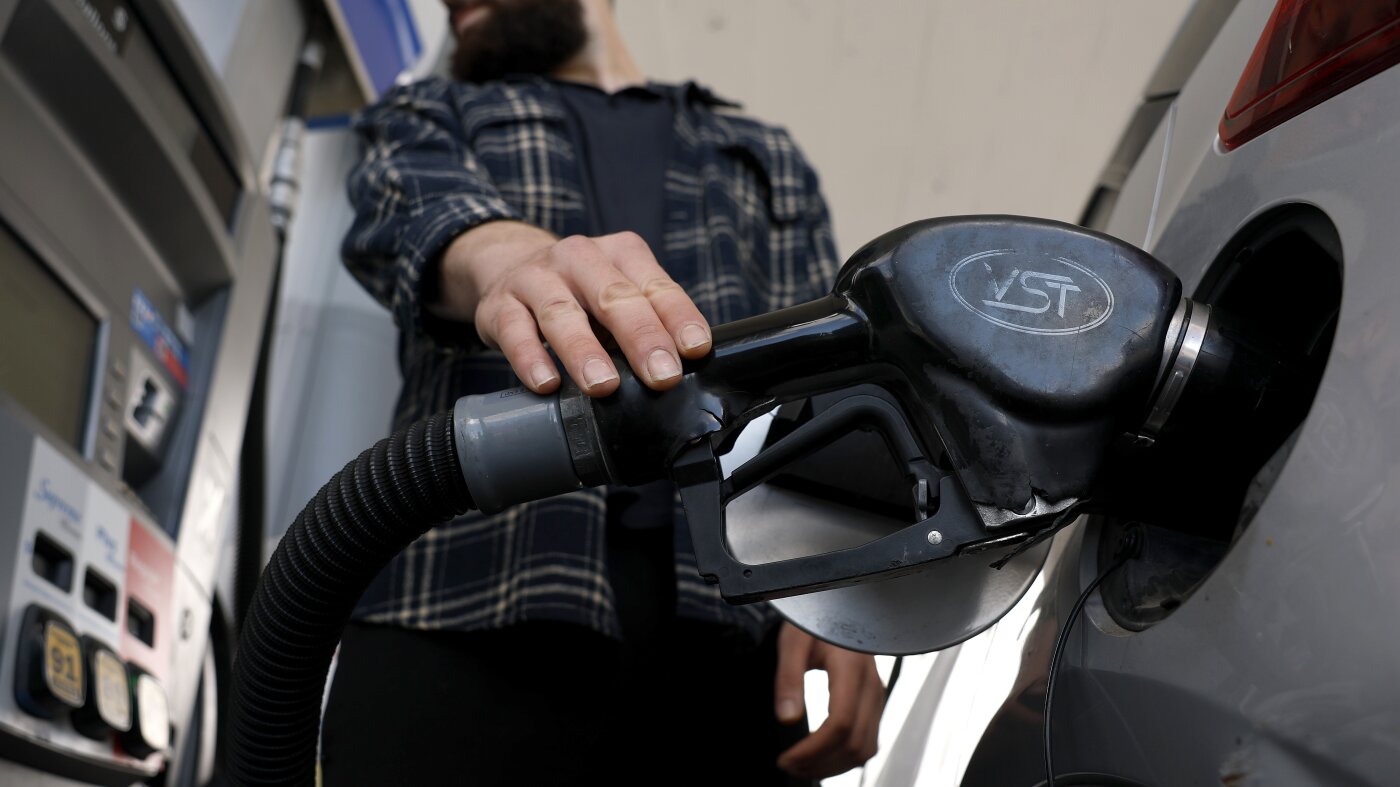
Fuel Saving Strategies - {新闻固定描述} The national average for a gallon of gasoline stands at $4.55 as the United States enters one of its busiest travel weekends of the year. To manage higher fuel costs, drivers are considering slower driving, switching to electric vehicles, or reducing trips altogether.
Live News
Fuel Saving Strategies - {新闻固定描述} Maintaining detailed trade records is a hallmark of disciplined investing. Reviewing historical performance enables professionals to identify successful strategies, understand market responses, and refine models for future trades. Continuous learning ensures adaptive and informed decision-making. The latest national average gasoline price of $4.55 per gallon has been reported as millions of Americans prepare for a peak travel weekend. According to the source, motorists are weighing several options to reduce fuel expenses, including driving at slower speeds, adopting electric vehicles (EVs), and minimizing or eliminating non-essential driving. Driving slower can improve fuel efficiency—the U.S. Department of Energy notes that each 5 mph decrease in highway speed may improve fuel economy by 7% to 14%. Switching to an electric vehicle would eliminate gasoline costs entirely, though upfront purchase prices and charging infrastructure remain considerations. For those unable to change vehicles, combining errands, carpooling, or using public transit could reduce total miles driven. The source does not provide specific savings estimates beyond these general strategies. The $4.55 figure represents a notable increase from recent norms, though it is not a record high. The timing coincides with the Memorial Day weekend or another holiday period, depending on the year, when gasoline demand typically peaks. Higher prices may be influencing travel plans, but the exact impact on aggregate demand remains unclear.
As Gas Prices Hit $4.55, Drivers Explore Fuel-Saving Strategies Ahead of Busy Travel Weekend Effective risk management is a cornerstone of sustainable investing. Professionals emphasize the importance of clearly defined stop-loss levels, portfolio diversification, and scenario planning. By integrating quantitative analysis with qualitative judgment, investors can limit downside exposure while positioning themselves for potential upside.Market participants increasingly appreciate the value of structured visualization. Graphs, heatmaps, and dashboards make it easier to identify trends, correlations, and anomalies in complex datasets.As Gas Prices Hit $4.55, Drivers Explore Fuel-Saving Strategies Ahead of Busy Travel Weekend Tracking order flow in real-time markets can offer early clues about impending price action. Observing how large participants enter and exit positions provides insight into supply-demand dynamics that may not be immediately visible through standard charts.Real-time data supports informed decision-making, but interpretation determines outcomes. Skilled investors apply judgment alongside numbers.
Key Highlights
Fuel Saving Strategies - {新闻固定描述} Observing market correlations can reveal underlying structural changes. For example, shifts in energy prices might signal broader economic developments. Key takeaways from the latest data include the pressure on household budgets from elevated gasoline costs. For consumers, even small behavioral changes—such as reducing speed by 5–10 mph, ensuring proper tire inflation, and avoiding excessive idling—could cumulatively lower fuel bills. Electric vehicles present a longer-term option, but high upfront costs and limited charging access may slow widespread adoption. From a market perspective, sustained high gasoline prices could lead to reduced driving miles and lower demand for gasoline, potentially easing price pressures over time. Conversely, if demand remains robust during the travel weekend, prices could stay elevated. The energy sector may see mixed impacts: oil refiners could benefit from high margins, while retailers of gasoline might face volume declines as consumers cut back. No specific forecasts have been provided in the source, but historical patterns suggest that consumers often adjust behavior when prices cross psychological thresholds like $4.00 per gallon. The shift toward fuel-efficient vehicles, including hybrids and EVs, tends to accelerate in such environments.
As Gas Prices Hit $4.55, Drivers Explore Fuel-Saving Strategies Ahead of Busy Travel Weekend Investors often balance quantitative and qualitative inputs to form a complete view. While numbers reveal measurable trends, understanding the narrative behind the market helps anticipate behavior driven by sentiment or expectations.Analytical tools can help structure decision-making processes. However, they are most effective when used consistently.As Gas Prices Hit $4.55, Drivers Explore Fuel-Saving Strategies Ahead of Busy Travel Weekend While algorithms and AI tools are increasingly prevalent, human oversight remains essential. Automated models may fail to capture subtle nuances in sentiment, policy shifts, or unexpected events. Integrating data-driven insights with experienced judgment produces more reliable outcomes.Effective risk management is a cornerstone of sustainable investing. Professionals emphasize the importance of clearly defined stop-loss levels, portfolio diversification, and scenario planning. By integrating quantitative analysis with qualitative judgment, investors can limit downside exposure while positioning themselves for potential upside.
Expert Insights
Fuel Saving Strategies - {新闻固定描述} Some investors rely on sentiment alongside traditional indicators. Early detection of behavioral trends can signal emerging opportunities. For investors, the current gasoline price environment may have implications across several sectors. Automakers with strong EV lineups—such as Tesla, General Motors, and Ford, among others—could see increased interest from consumers looking to avoid gasoline costs. However, the transition to electric mobility remains gradual, and traditional internal combustion engine vehicle sales may not decline sharply in the near term. The energy sector might experience mixed outcomes: upstream oil producers could benefit from sustained high prices, while downstream companies (e.g., refiners and fuel retailers) could face margin compression if demand falls. Renewable energy and battery storage stocks could also attract attention as alternatives to gasoline-dependent transportation. Broader economic impacts are worth monitoring. Higher gasoline prices act as a tax on consumers, potentially reducing discretionary spending in other areas. This could weigh on consumer-facing stocks and retail sectors that are not energy-related. However, the effect may be moderate if prices stabilize or decline after the holiday weekend. Disclaimer: This analysis is for informational purposes only and does not constitute investment advice.
As Gas Prices Hit $4.55, Drivers Explore Fuel-Saving Strategies Ahead of Busy Travel Weekend The integration of AI-driven insights has started to complement human decision-making. While automated models can process large volumes of data, traders still rely on judgment to evaluate context and nuance.Correlating global indices helps investors anticipate contagion effects. Movements in major markets, such as US equities or Asian indices, can have a domino effect, influencing local markets and creating early signals for international investment strategies.As Gas Prices Hit $4.55, Drivers Explore Fuel-Saving Strategies Ahead of Busy Travel Weekend Scenario analysis and stress testing are essential for long-term portfolio resilience. Modeling potential outcomes under extreme market conditions allows professionals to prepare strategies that protect capital while exploiting emerging opportunities.From a macroeconomic perspective, monitoring both domestic and global market indicators is crucial. Understanding the interrelation between equities, commodities, and currencies allows investors to anticipate potential volatility and make informed allocation decisions. A diversified approach often mitigates risks while maintaining exposure to high-growth opportunities.